


Not Estranged From Love
- jamillawrites
- Jan 24
- 2 min read

Updated: Jan 27
There’s a dating show that’s been floating across social media lately — Pop the Balloon.
One person chooses.
Several others hope to be chosen.
Each holds a balloon, knowing rejection could come at any moment.
What keeps standing out to me isn’t the rejection itself.
It’s a question that keeps surfacing: “What’s your relationship like with your parents?”
It’s often framed as a litmus test, as if closeness guarantees emotional health, and distance signals dysfunction. But real life is rarely that simple.
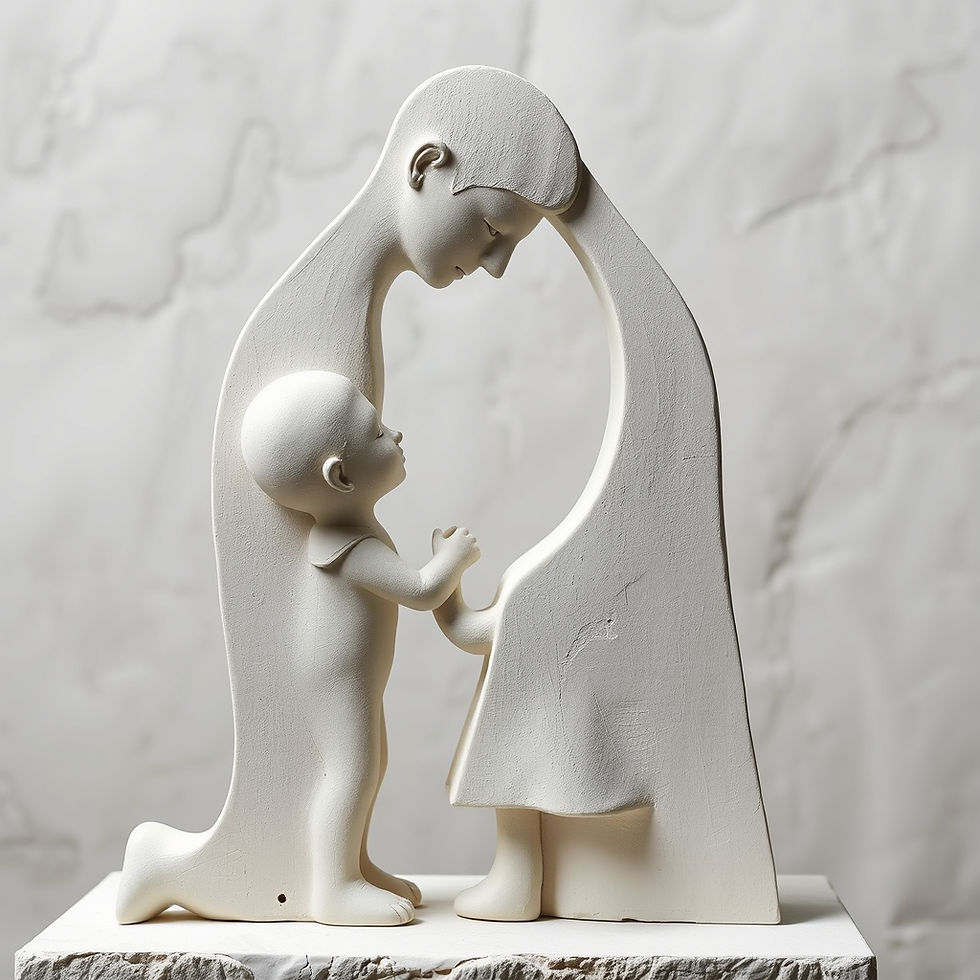
When Distance Isn’t a Defect
Sometimes, distance from a parent isn’t a failure of love. Sometimes it’s a response to harm.
Some childhoods weren’t just difficult, they were emotionally unsafe, unstable, or overwhelming. For many people, closeness didn’t feel like comfort. It felt like pressure.
Or silence. Or walking on eggshells. Or becoming the adult far too soon.
In those cases, distance less an act of rebellion and more of an avenue for self-preservation.
Estrangement often comes after years of trying: explaining, hoping, shrinking, negotiating emotional needs, or grieving what never was.
People don’t walk away lightly. They walk away after loving deeply and not being met.
Estrangement Isn’t the Absence of Love
It’s often the aftermath of loving too hard without safety.
My relationship with my parents has always felt long-distance —not in miles, but in emotional closeness. It isn’t traditional. It isn’t simple. It simply is. And instead of breaking me, it sharpened me. It made me: a more intentional mother, a more attuned therapist, a more mindful partner, a woman who refuses to abandon people carelessly.
Because when you know what abandonment feels like, you don’t offer it casually. You learn how much presence matters.
What Really Predicts Emotional Safety
Parental closeness doesn’t predict someone’s capacity for love. Self-awareness does.
The real questions are:
Can you reflect on your patterns?
Can you repair when you hurt someone?
Can you take responsibility without collapsing into shame?
Can you love without needing perfection — from yourself or others?
Those skills are learned. They are practiced. They are not inherited.
When That Question Reopens Grief
For some people, being asked about their parents doesn’t just measure closeness. It quietly invites grief into the room. For those who’ve lost parents — or never had safe ones — that question can force a decision: Do I disclose something tender, unfinished, or painful…just to stay connected?
Loss doesn’t make someone unsafe. Unresolved grief doesn’t mean they can’t love deeply.
Often, it means they understand how fragile love truly is.
You Are Not Your Family History
Your parents may be part of your story, but they are not proof of your worth, your readiness,
or your ability to love well. And if someone needs your family history to be pristine before they can honor your humanity…they probably aren’t ready to hold your complexity anyway.
Between You and You
Love isn’t inherited. It’s practiced. It’s built in awareness. In accountability. In softness. In courage. In choosing growth, even when the past was imperfect.
And sometimes, the bravest thing a person can do is love differently than they were loved.
I'll meet you again.
Between You and You.


Comments